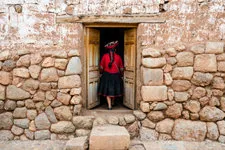
Chinchero in the Sacred Valley of the Incas, Peru

Will Chinchero in the Sacred Valley of the Incas Become the First

Chinchero in the Sacred Valley of the Incas, Peru
Mini. Chinchero in the Sacred Valley of the Incas, Peru
Cover. Chinchero in the Sacred Valley of the Incas, Peru

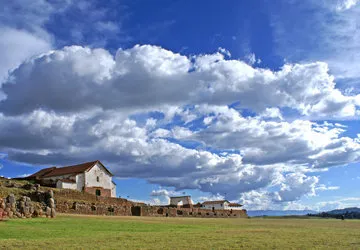
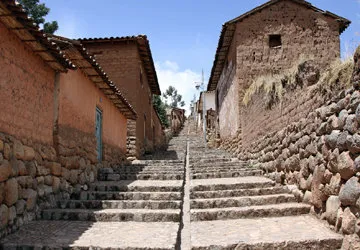
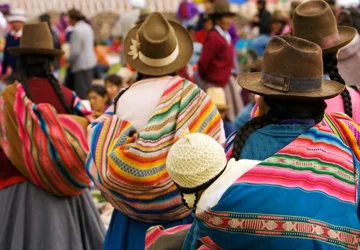
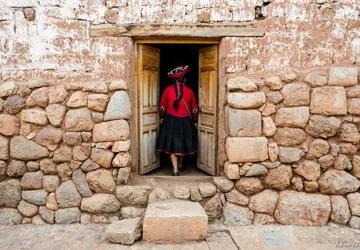
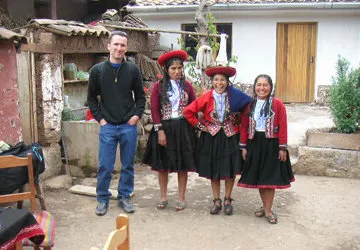
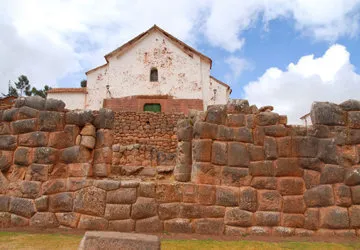
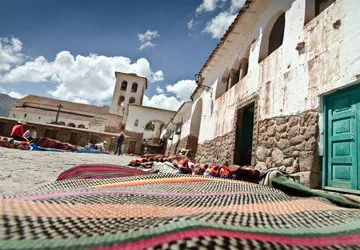
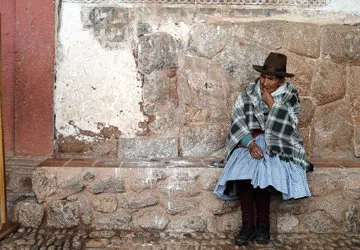
Chinchero's modest handicraft market, Incan ruins, and Spanish colonial church attract travelers who walk the cobblestone streets alongside a Quechua-speaking population that depends mainly on traditional weaving and subsistence farming. They would refer to Chinchero as a village, but local and national authorities have a new vision for Chinchero: with the help of specialists from the government of Singapore, Chinchero aims to become Peru's first 'Smart City'.

Most travelers would generously refer to Chinchero as a village, and a rural, windswept village at that. A modest handicraft market, Incan ruins, and a Spanish colonial church attract visitors who walk the dirt roads and cobblestone streets alongside a mainly Quechua-speaking population. The majority of locals depend on traditional weaving and subsistence farming. Chinchero, however, has surprising plans in mind.

This month, representatives from Peru's Ministry of Transport & Communications and Housing Ministry met with specialists in commercial agency and planning from the government of Singapore and authorities from the little town of Chinchero in the Sacred Valley of the Incas. Through successive meetings, they gauged the potential for Chinchero to convert itself into the first 'smart city' in Peru, and one of the first in Latin America. Gaulberto Sallo, the chief magistrate of Chinchero, assured news outlets that, "Chinchero is a strategic zone and it will become one of the most important development poles in the southern region of our country….we are fulfilling one by one the necessary precepts."

It's easier said than done- to make the leap, Chinchero will need to take into account its government, urban planning, public management, environmental technology, international projection, social cohesion, and transport. It will be helped by the new international airport, which has been planned to be built in Chinchero in order to assist Cusco, whose present airport can't meet the demand of travelers en route to nearby Machu Picchu.

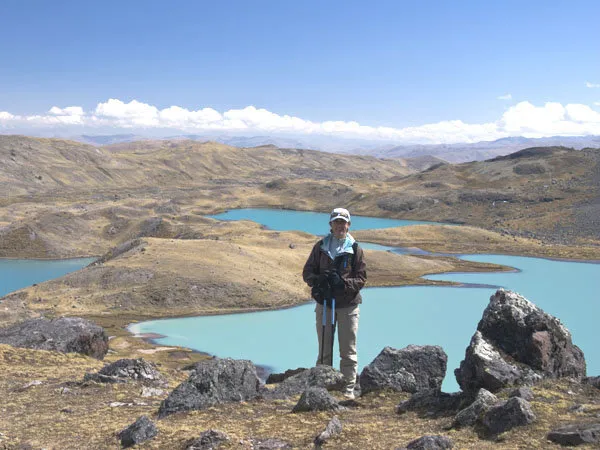
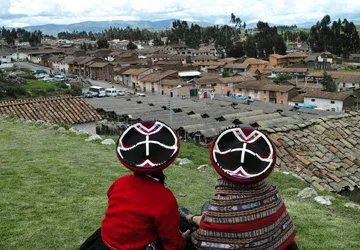
For the moment, however, travelers can reach Chinchero by a short half-hour bus drive to enjoy a rural town that boasts scenic hills and lakes and colorful patch-work fields of alternating subsistence crops. On Tuesday and Sunday, the market convenes near the main square. If possible, visit the town's colonial church, which is propped atop the ruins of an Incan temple. Its humble exterior hides an interior largely covered with paintings.

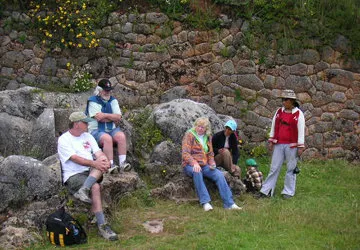
If you'd prefer some guidance and history along with your visit, don't worry- day trips to the Sacred Valley of the Incas leave Cusco every morning, and Chinchero is on the itinerary. Or, if the traditional weavings interest you, you can learn more about the local yarn-making, dying, and weaving techniques by taking a weavers tour.
Chinchero's modest handicraft market, Incan ruins, and Spanish colonial church attract travelers who walk the cobblestone streets alongside a Quechua-speaking population that depends mainly on traditional weaving and subsistence farming. They would refer to Chinchero as a village, but local and national authorities have a new vision for Chinchero: with the help of specialists from the government of Singapore, Chinchero aims to become Peru's first 'Smart City'.

Most travelers would generously refer to Chinchero as a village, and a rural, windswept village at that. A modest handicraft market, Incan ruins, and a Spanish colonial church attract visitors who walk the dirt roads and cobblestone streets alongside a mainly Quechua-speaking population. The majority of locals depend on traditional weaving and subsistence farming. Chinchero, however, has surprising plans in mind.

This month, representatives from Peru's Ministry of Transport & Communications and Housing Ministry met with specialists in commercial agency and planning from the government of Singapore and authorities from the little town of Chinchero in the Sacred Valley of the Incas. Through successive meetings, they gauged the potential for Chinchero to convert itself into the first 'smart city' in Peru, and one of the first in Latin America. Gaulberto Sallo, the chief magistrate of Chinchero, assured news outlets that, "Chinchero is a strategic zone and it will become one of the most important development poles in the southern region of our country….we are fulfilling one by one the necessary precepts."

It's easier said than done- to make the leap, Chinchero will need to take into account its government, urban planning, public management, environmental technology, international projection, social cohesion, and transport. It will be helped by the new international airport, which has been planned to be built in Chinchero in order to assist Cusco, whose present airport can't meet the demand of travelers en route to nearby Machu Picchu.

For the moment, however, travelers can reach Chinchero by a short half-hour bus drive to enjoy a rural town that boasts scenic hills and lakes and colorful patch-work fields of alternating subsistence crops. On Tuesday and Sunday, the market convenes near the main square. If possible, visit the town's colonial church, which is propped atop the ruins of an Incan temple. Its humble exterior hides an interior largely covered with paintings.

If you'd prefer some guidance and history along with your visit, don't worry- day trips to the Sacred Valley of the Incas leave Cusco every morning, and Chinchero is on the itinerary. Or, if the traditional weavings interest you, you can learn more about the local yarn-making, dying, and weaving techniques by taking a weavers tour.
News, routes, and expert tips

Explore the latest from our Cusco travel blog. Get practical guides, Machu Picchu updates, and fresh trekking and culture recommendations. Everything you need to travel Cusco safely and stylishly in 2026. Your next Andean story starts here!

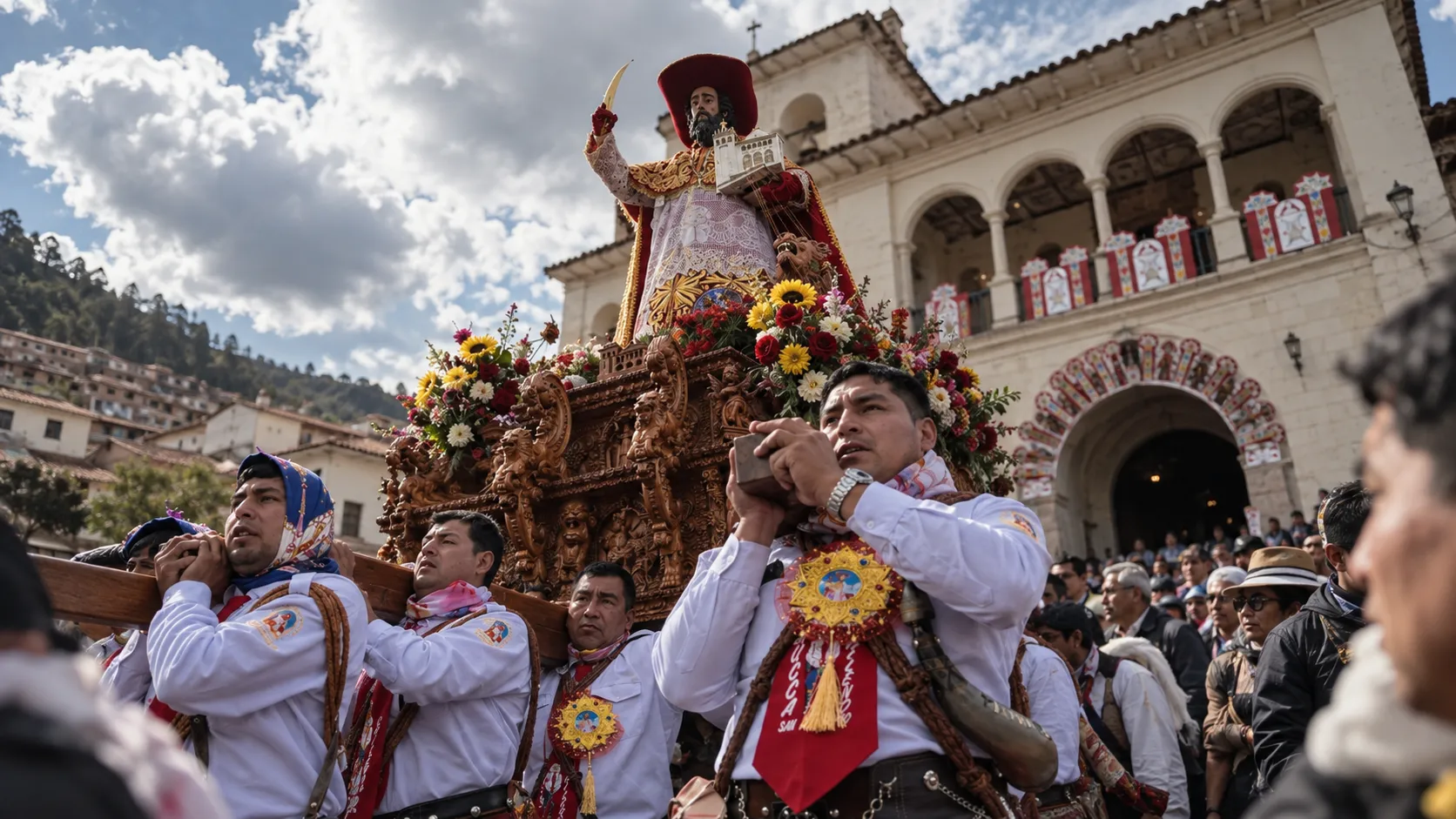
The festival starting Monday 28th that isn't touristy: San Jerónimo, 5 days

Just 11 kilometers from the Plaza de Armas, the historic district of San Jerónimo celebrates its patron saint every late September: 5 days of processions, 26+ dance troupes, a food fair, and a 16th-century church built on an Inca huaca. In 2016, it was declared Cultural Heritage of the Nation. Most tourists don't know it exists; many young locals don't either. This year it starts on Monday, September 28, with the main day on Wednesday 30.

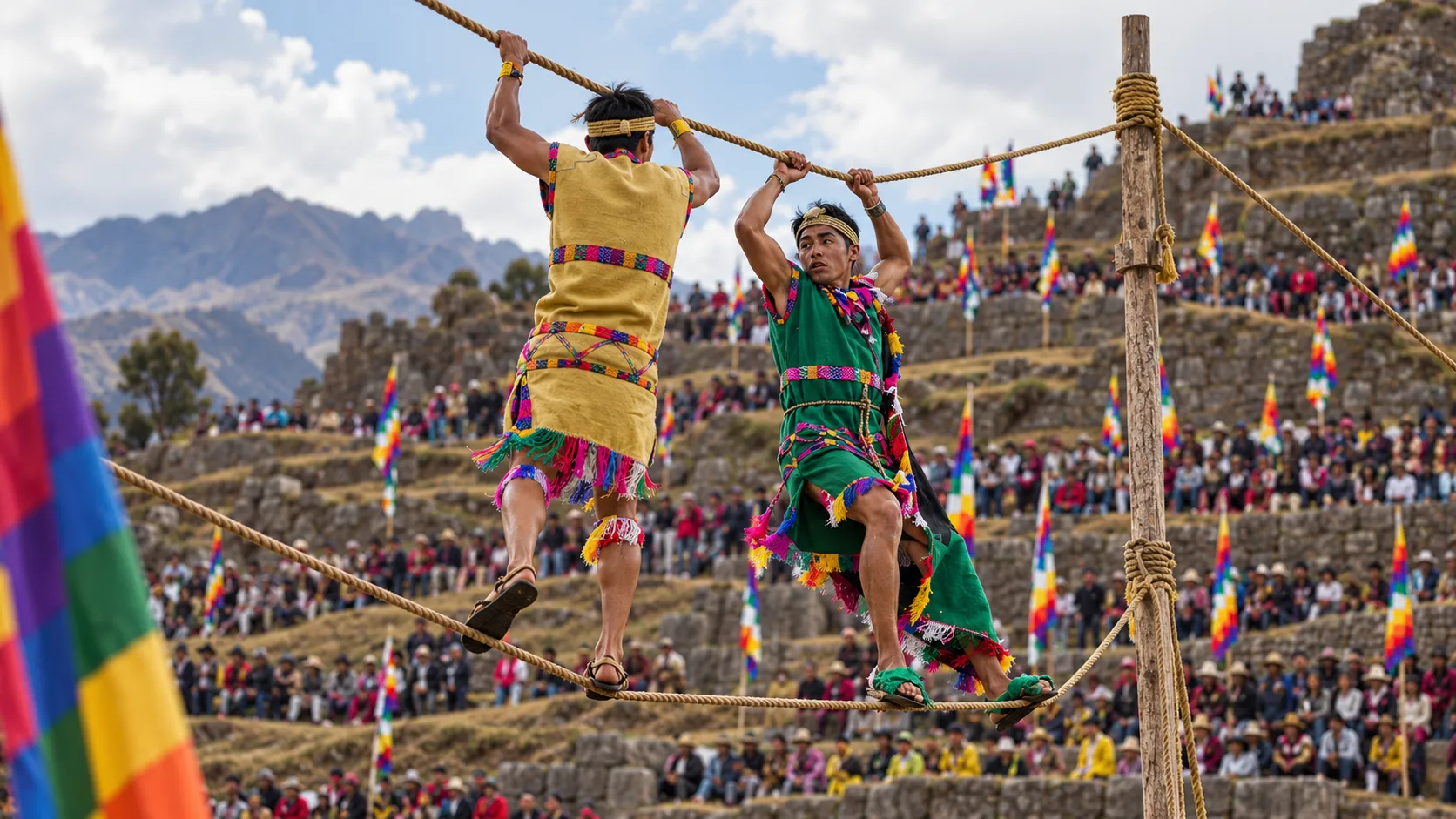
1,500 young people in Sacsayhuamán competing as they did 500 years ago

Third Sunday of September. 9 a.m. The pututos sound and 1,500 students from the National School of Sciences of Cusco set off in procession from their school to the Sacsayhuamán esplanade. They are going to compete — for real — in speed, strength, and endurance tests that replicate those the Tahuantinsuyo used to determine who was ready for adulthood. It is not a choreography. It is the Warachicuy, and in 2025 it was declared a Cultural Interest.

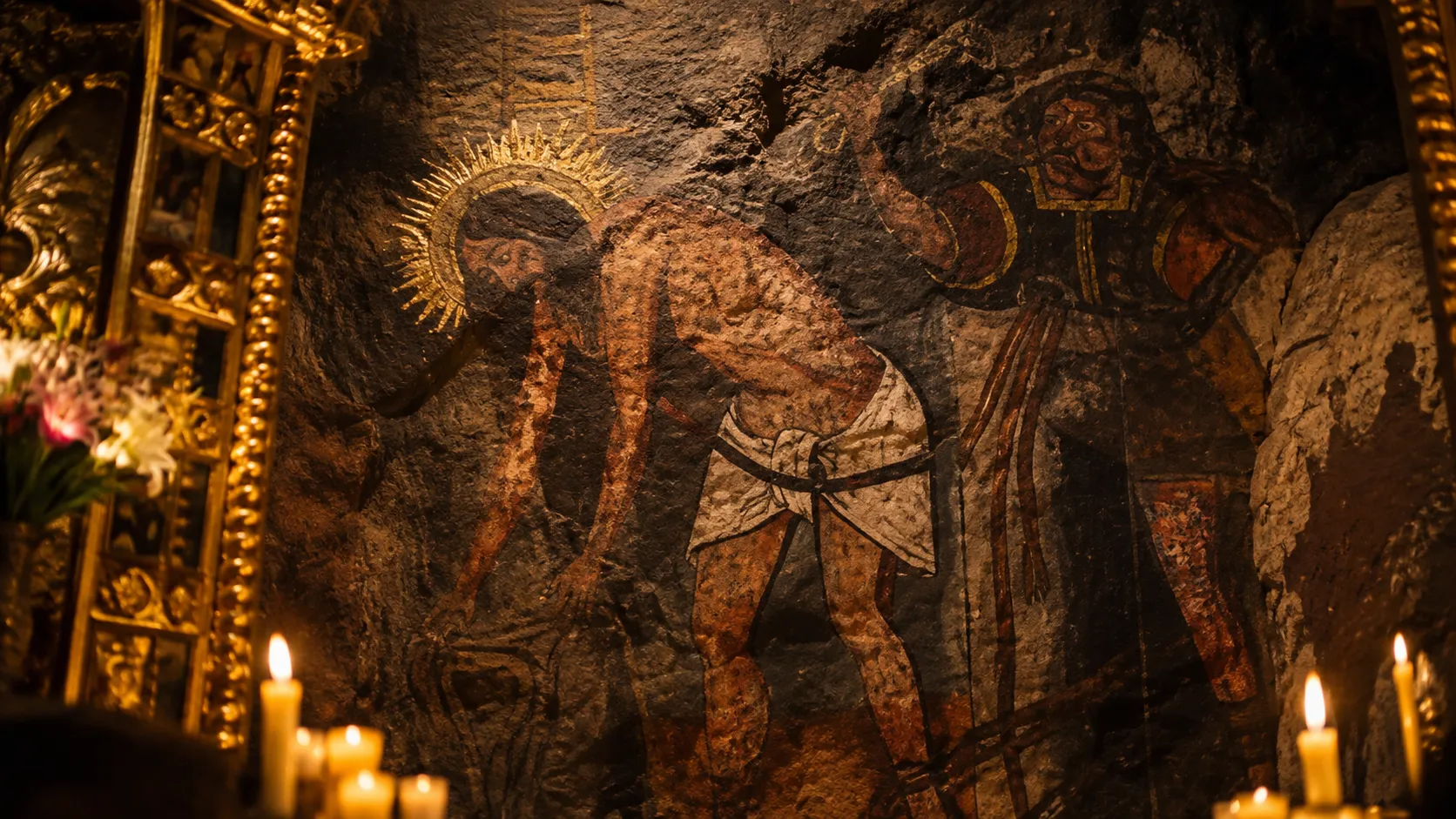
48 km on foot: How to reach the Señor de Huanca in Cusco

Every September 14, thousands of people walk 48 kilometers from the city of Cusco to the sanctuary of the Señor de Huanca, in the district of San Salvador, province of Calca, at 3,100 m.a.s.l. It is neither a tourist trekking trip nor an organized tour: it is a genuine pilgrimage that sets off at night from San Jerónimo and arrives at dawn on the main day. Here we explain the route, what it physical demands, and why this tradition continues to draw devotees from all over Peru and neighboring countries.

Are you planning to visit
Machu Picchu in 2026?

We would like to inform our travelers that availability for Circuit 1 and 2 for the months of September, October and November is at 85% of capacity. We recommend booking at least 3 months in advance.

New Circuits and Routes

The Ministry of Culture has consolidated the three main tours. As of 2026, Tour 2 (The Royal Route) remains the only one that allows visitors to take the classic photo from the Guardian’s House. We have adapted all our packages to ensure this access.

Digital Check-In and Biometric Verification

Say goodbye to long check-in lines! Starting this season, entry is faster thanks to the new digital check-in system. Our packages include full management of your personalized tickets to prevent errors on the state platform.

Circuit Ideal for... Clasic photo Difficulty
Circuit 1 (Panoramic) High views and photo posts Yes Low
Circuit 2 (Andean) Complete circuit through the ruins Yes Medium
Circuit 3 (Reality) Persons or reduced movement No Very low

Ask about our Machu Picchu packages

Explore the best of our land

Explore the breathtaking diversity of the Central Andes. From ancient archaeological wonders and surreal high-altitude landscapes to world-class gastronomy and Amazonian adventures, our updated 2026 guides showcase the very best of this premier global destination.