


Flight to La Paz from Rurrenabaque in the Bolivian Amazon

Tourists will Benefit from Four New Airports for Bolivia in 2014

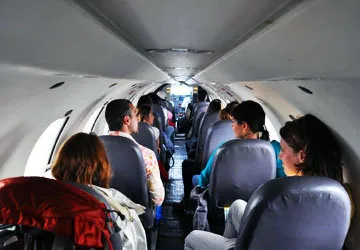
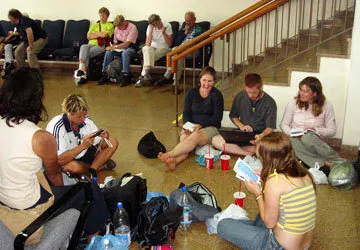
Flight to La Paz from Rurrenabaque in the Bolivian Amazon
Six-hour layover at Santa Cruz Airport in Bolivia
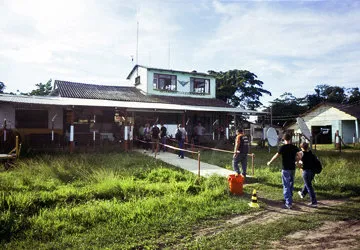
Arriving at Rurrenabaque Airport in the Bolivian Amazon

As part of a multi-year push to modernize travel in Bolivia, the country plans to complete construction for 4 new airports by next year. Until now, travelers have reached Copacabana by bus from Puno, Peru or La Paz, but now the town will be more accessible, as well as Sucre and neighboring Potosí.

Vladimir Sánchez, Bolivia's Minister of Housing & Public Works, announced last month the construction of four new airports that will open in 2014. Two of these will be international airports, while the other two will be dedicated to domestic tourism.

For years, Bolivia was hampered by one of South America's most backward air transport systems, controlled until recently by transnational companies. Yet significant changes have been underway this year. In February, Evo Morales inaugurated a new international airport in Oruro. The same month, the president decided to nationalize three of the nation's main airports and the Spanish-owned company which administers them, establishing an investment plan to improve services.

The Touristic Airport of Copacabana (Department of La Paz)

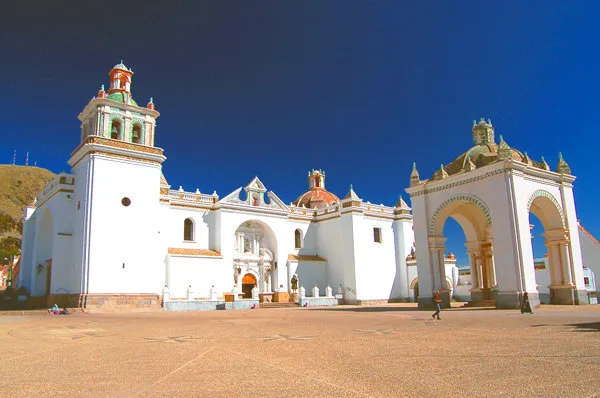
Construction is already underway in the popular backpackers' town of Copacabana west of La Paz, along the shores of Lake Titicaca. Currently, the many visitors to its Sanctuary of the Virgen of Candelaria and to the Isla del Sol arrive in town vía bus from Puno, in Peru, or La Paz. The volume of tourism in the area, and the relative affluence of its national and foreign visitors, has convinced the Ministry of the need for the airport, for which 18.6 million bolivianos (around 2.6 million dollars) has been budgeted.

The International Airport of Alacantarí & Touristic Airport of Monteagudo (Department of Chuquisaca)

The International Airport of Alacantarí is expected to replace the current airport located in the city of Sucre, which no longer receives any international flights. Few domestic airlines fly to Sucre as well, despite the city's reputation as a tranquil retreat and its proximity to Potosí, with its popular silver mines. Thus far, 15% has been constructed in a project that will ultimately require at least 120 million bolivianos (13 million euros). The Touristic Airport of Monteagudo, a town also close to Sucre, began construction this past April, and is expected to cost and 23.7 million bolivianos (2.6 million euros).

The International Airport of Chimoré (Department of Cochabamba)

Chimoré, in central Bolivia, is where important coca leaf syndicates reside, whose principal leader is President Evo Morales. The town will also receive an international airport, at a cost of 12 million dollars.
As part of a multi-year push to modernize travel in Bolivia, the country plans to complete construction for 4 new airports by next year. Until now, travelers have reached Copacabana by bus from Puno, Peru or La Paz, but now the town will be more accessible, as well as Sucre and neighboring Potosí.

Vladimir Sánchez, Bolivia's Minister of Housing & Public Works, announced last month the construction of four new airports that will open in 2014. Two of these will be international airports, while the other two will be dedicated to domestic tourism.

For years, Bolivia was hampered by one of South America's most backward air transport systems, controlled until recently by transnational companies. Yet significant changes have been underway this year. In February, Evo Morales inaugurated a new international airport in Oruro. The same month, the president decided to nationalize three of the nation's main airports and the Spanish-owned company which administers them, establishing an investment plan to improve services.

The Touristic Airport of Copacabana (Department of La Paz)

Construction is already underway in the popular backpackers' town of Copacabana west of La Paz, along the shores of Lake Titicaca. Currently, the many visitors to its Sanctuary of the Virgen of Candelaria and to the Isla del Sol arrive in town vía bus from Puno, in Peru, or La Paz. The volume of tourism in the area, and the relative affluence of its national and foreign visitors, has convinced the Ministry of the need for the airport, for which 18.6 million bolivianos (around 2.6 million dollars) has been budgeted.

The International Airport of Alacantarí & Touristic Airport of Monteagudo (Department of Chuquisaca)

The International Airport of Alacantarí is expected to replace the current airport located in the city of Sucre, which no longer receives any international flights. Few domestic airlines fly to Sucre as well, despite the city's reputation as a tranquil retreat and its proximity to Potosí, with its popular silver mines. Thus far, 15% has been constructed in a project that will ultimately require at least 120 million bolivianos (13 million euros). The Touristic Airport of Monteagudo, a town also close to Sucre, began construction this past April, and is expected to cost and 23.7 million bolivianos (2.6 million euros).

The International Airport of Chimoré (Department of Cochabamba)

Chimoré, in central Bolivia, is where important coca leaf syndicates reside, whose principal leader is President Evo Morales. The town will also receive an international airport, at a cost of 12 million dollars.
News, routes, and expert tips

Explore the latest from our Cusco travel blog. Get practical guides, Machu Picchu updates, and fresh trekking and culture recommendations. Everything you need to travel Cusco safely and stylishly in 2026. Your next Andean story starts here!

Inca World Travel Your ticket to Machu Picchu cannot be lent: What you need to know before the holiday

With the national holiday on August 6 (Battle of Junín) right around the corner, many travelers are organizing last-minute visits to Machu Picchu. Before buying, there is a rule that causes more trouble than it seems: the ticket is personal, unique, and non-transferable. Learn how this rule works at the checkpoint, why you cannot give your ticket away, and how to avoid inconveniences to enjoy your trip to the sanctuary with complete peace of mind.

Inca World Travel Official Machu Picchu Circuits and Routes Guide 2026: How to Choose Your Ideal Ticket

Choosing your entry ticket to Machu Picchu is no longer just buying a simple ticket; it is selecting a strategic route for your trip. The official system organizes the citadel into 3 main circuits with 10 route variants tailored to different traveler profiles. From the classic panoramic photo to the ascent of Huayna Picchu or the legendary Inca Trail, understanding how each circuit works is key to avoiding inconveniences and securing your spot in advance on the official platform.

Inca World Travel Seven Natural Wonders Hidden By Peru Discover Now

Ready to explore beyond Machu Picchu? Discover the 7 natural wonders of Peru, a country brimming with hidden ecological treasures. From deep turquoise lagoons and the famous rainbow mountain of colors to surreal stone forests and vast rivers, these stunning destinations are waiting for you. Get ready to dive into the raw, untouched beauty of South America!

Are you planning to visit
Machu Picchu in 2026?

We would like to inform our travelers that availability for Circuit 1 and 2 for the months of September, October and November is at 85% of capacity. We recommend booking at least 3 months in advance.

New Circuits and Routes

The Ministry of Culture has consolidated the three main tours. As of 2026, Tour 2 (The Royal Route) remains the only one that allows visitors to take the classic photo from the Guardian’s House. We have adapted all our packages to ensure this access.

Digital Check-In and Biometric Verification

Say goodbye to long check-in lines! Starting this season, entry is faster thanks to the new digital check-in system. Our packages include full management of your personalized tickets to prevent errors on the state platform.

Circuit Ideal for... Clasic photo Difficulty
Circuit 1 (Panoramic) High views and photo posts Yes Low
Circuit 2 (Andean) Complete circuit through the ruins Yes Medium
Circuit 3 (Reality) Persons or reduced movement No Very low

Ask about our Machu Picchu packages

Explore the best of our land

Explore the breathtaking diversity of the Central Andes. From ancient archaeological wonders and surreal high-altitude landscapes to world-class gastronomy and Amazonian adventures, our updated 2026 guides showcase the very best of this premier global destination.