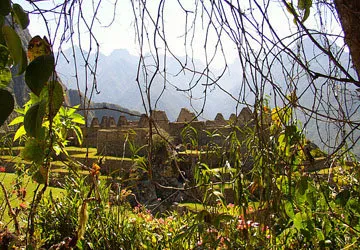
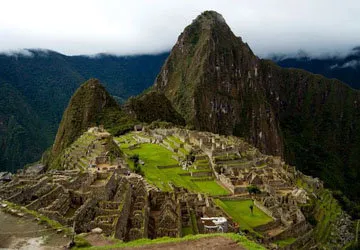
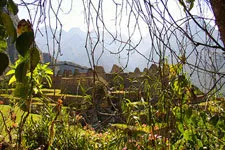
Machu Picchu seen through the vines in the Peruvian Andes.

Possible Royal Tomb Discovered at Machu Picchu

Machu Picchu seen through the vines in the Peruvian Andes.
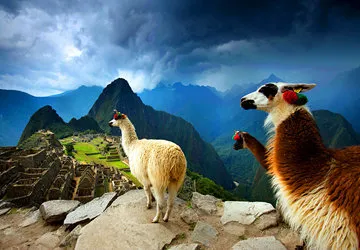
Llamas, the last permanent residents of Machu Picchu in Peru
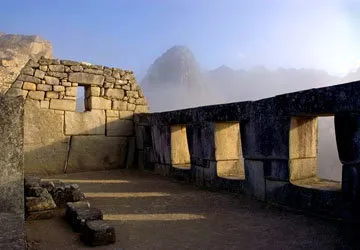
Temple of Three Windows at Machu Picchu Archeological Site.

Last month a tomb was found in Machu Picchu Sanctuary, adding yet more fuel to the rising theory that Pachacutec's remains were interred at the site, and another theory regarding the long-lost name of Machu Picchu, which was announced earlier this year by a Spanish historian studying the lost chapters of the Juan de Betanzos chronicles from the time of the Conquest....

Despite Machu Picchu's popularity, it remains shrouded in mystery, a fact underscored last month when a burial chamber was discovered at the site. It differs from other area tombs in that it rests above these, in a cave high on the slope of Huayna Picchu overlooking Machu Picchu, and in that it was constructed with finely carved stones. Both features attest to the importance of the person interred therein. Unfortunately, the tomb was sacked by raiders at some point in its history, depriving archeologists of access to any remains, although specialists will still attempt to date and restore the tomb.

The currently prevailing theory among scholars is that Machu Picchu was a winter resort for the Inca emperor Pachacutec, although another popular school of thought is that it primarily functioned as a sacred center. Some scholars theorize that this, or another recently discovered tomb under the Temple of the Sun, may have been the grave of Pachacútec. This would accord with Luis Lumbreras's theory that Machu Picchu was a sanctuary dedicated to the dead, especially Pachacútec, based on a 1568 chronicle which relates that the lands of the Picchu ravine were dedicated to the cult to the dead. If you're interested in visiting the site and choosing for yourself which theories seem to unlock its secrets, make sure to browse Inca World Travel's Machu Picchu tours.

After studying the lost chapters of the Juan de Betanzos chronicles, Spanish historian María del Carmen Martín made headlines in March when she proclaimed that Machu Picchu's original name was Patallaqta (City of Terraces), the administrative center of the empire's agricultural network mentioned in various chronicles. In the chapters, Pachacútec requests to be buried in Patallaqta and Qoricancha. She slightly contradicted Lumbreras's theory that the tomb belonged to Pachacutec's mummy, clarifying that worshipers probably venerated a golden funerary bundle holding organs and nail and hair clippings taken throughout his life, with the embalmed mummy held in another bundle at Cusco's Qoricancha temple, common practice for Inca rulers at the time.
Last month a tomb was found in Machu Picchu Sanctuary, adding yet more fuel to the rising theory that Pachacutec's remains were interred at the site, and another theory regarding the long-lost name of Machu Picchu, which was announced earlier this year by a Spanish historian studying the lost chapters of the Juan de Betanzos chronicles from the time of the Conquest....

Despite Machu Picchu's popularity, it remains shrouded in mystery, a fact underscored last month when a burial chamber was discovered at the site. It differs from other area tombs in that it rests above these, in a cave high on the slope of Huayna Picchu overlooking Machu Picchu, and in that it was constructed with finely carved stones. Both features attest to the importance of the person interred therein. Unfortunately, the tomb was sacked by raiders at some point in its history, depriving archeologists of access to any remains, although specialists will still attempt to date and restore the tomb.

The currently prevailing theory among scholars is that Machu Picchu was a winter resort for the Inca emperor Pachacutec, although another popular school of thought is that it primarily functioned as a sacred center. Some scholars theorize that this, or another recently discovered tomb under the Temple of the Sun, may have been the grave of Pachacútec. This would accord with Luis Lumbreras's theory that Machu Picchu was a sanctuary dedicated to the dead, especially Pachacútec, based on a 1568 chronicle which relates that the lands of the Picchu ravine were dedicated to the cult to the dead. If you're interested in visiting the site and choosing for yourself which theories seem to unlock its secrets, make sure to browse Inca World Travel's Machu Picchu tours.

After studying the lost chapters of the Juan de Betanzos chronicles, Spanish historian María del Carmen Martín made headlines in March when she proclaimed that Machu Picchu's original name was Patallaqta (City of Terraces), the administrative center of the empire's agricultural network mentioned in various chronicles. In the chapters, Pachacútec requests to be buried in Patallaqta and Qoricancha. She slightly contradicted Lumbreras's theory that the tomb belonged to Pachacutec's mummy, clarifying that worshipers probably venerated a golden funerary bundle holding organs and nail and hair clippings taken throughout his life, with the embalmed mummy held in another bundle at Cusco's Qoricancha temple, common practice for Inca rulers at the time.
News, routes, and expert tips

Explore the latest from our Cusco travel blog. Get practical guides, Machu Picchu updates, and fresh trekking and culture recommendations. Everything you need to travel Cusco safely and stylishly in 2026. Your next Andean story starts here!

Inca World Travel Your ticket to Machu Picchu cannot be lent: What you need to know before the holiday

With the national holiday on August 6 (Battle of Junín) right around the corner, many travelers are organizing last-minute visits to Machu Picchu. Before buying, there is a rule that causes more trouble than it seems: the ticket is personal, unique, and non-transferable. Learn how this rule works at the checkpoint, why you cannot give your ticket away, and how to avoid inconveniences to enjoy your trip to the sanctuary with complete peace of mind.

Inca World Travel Official Machu Picchu Circuits and Routes Guide 2026: How to Choose Your Ideal Ticket

Choosing your entry ticket to Machu Picchu is no longer just buying a simple ticket; it is selecting a strategic route for your trip. The official system organizes the citadel into 3 main circuits with 10 route variants tailored to different traveler profiles. From the classic panoramic photo to the ascent of Huayna Picchu or the legendary Inca Trail, understanding how each circuit works is key to avoiding inconveniences and securing your spot in advance on the official platform.

Inca World Travel Seven Natural Wonders Hidden By Peru Discover Now

Ready to explore beyond Machu Picchu? Discover the 7 natural wonders of Peru, a country brimming with hidden ecological treasures. From deep turquoise lagoons and the famous rainbow mountain of colors to surreal stone forests and vast rivers, these stunning destinations are waiting for you. Get ready to dive into the raw, untouched beauty of South America!

Are you planning to visit
Machu Picchu in 2026?

We would like to inform our travelers that availability for Circuit 1 and 2 for the months of September, October and November is at 85% of capacity. We recommend booking at least 3 months in advance.

New Circuits and Routes

The Ministry of Culture has consolidated the three main tours. As of 2026, Tour 2 (The Royal Route) remains the only one that allows visitors to take the classic photo from the Guardian’s House. We have adapted all our packages to ensure this access.

Digital Check-In and Biometric Verification

Say goodbye to long check-in lines! Starting this season, entry is faster thanks to the new digital check-in system. Our packages include full management of your personalized tickets to prevent errors on the state platform.

Circuit Ideal for... Clasic photo Difficulty
Circuit 1 (Panoramic) High views and photo posts Yes Low
Circuit 2 (Andean) Complete circuit through the ruins Yes Medium
Circuit 3 (Reality) Persons or reduced movement No Very low

Ask about our Machu Picchu packages

Explore the best of our land

Explore the breathtaking diversity of the Central Andes. From ancient archaeological wonders and surreal high-altitude landscapes to world-class gastronomy and Amazonian adventures, our updated 2026 guides showcase the very best of this premier global destination.