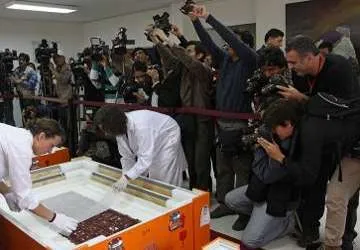
Unwrapping the Paracas textiles from Gothenburg

Peru Celebrates the Homecoming of the Gothenburg Shroud

Paracas textile now displayed in Lima, Peru
Ancient pre-Incan Paracas shroud now in Lima, Peru
Mini. Pre-Incan Paracas textile in Lima, Peru

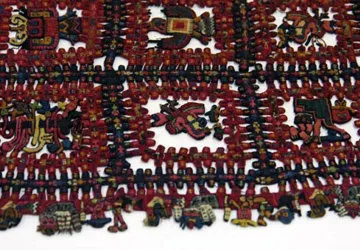
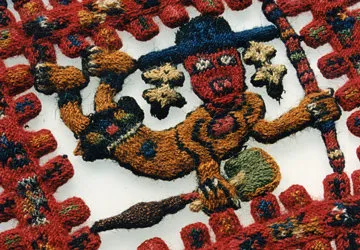
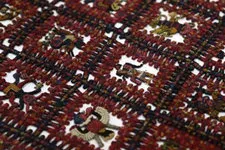
The Gothenburg Shroud is one of the latest successes in a string of victorious attempts to reclaim Peruvian artifacts smuggled out of the country over the last centuries, and the first in a series of shipments from Gothenurg's Museum of World Culture in Sweden. According to chemical tests, it dates back 2,000 years to the Paracas, a pre-Incan culture known for having created impressively intricate textiles.

The Gothenburg Shroud is one of the latest successes in a string of victorious attempts to reclaim Peruvian artifacts smuggled out of the country over the last centuries, and the first in a series of shipments from Gothenurg's Museum of World Culture in Sweden. According to chemical tests, it dates back 2,000 years to the Paracas, a pre-Incan culture known for having created impressively intricate textiles.

Textiles are fragile and thus some of the rarest artifacts to be preserved over time; the alpaca shroud was a stunning find because it had been perfectly preserved while buried in an arid climate. It was taken out of the country by a Swedish diplomat eighty years ago, shortly after its discovery. Peru has been trying to retrieve the shroud and other pre-Columbian artifacts from the museum since 2009.

The shroud's sophisticated design features brightly colored entities resembling frogs, cats and humans. Jahl Dulanto, who heads the Catholic University of Peru's archeological team studying the Paracas culture, has opined that it is actually an agricultural calendar.

The Gothenburg Shroud, together with the other Paracas textiles returned along with it, is currently on display in Lima and will go on permanent exhibition next year at the city's Archaeology and Anthropology Museum. The rest of 89-piece collection of pre-Columbian artifacts will be returned to Peru in following shipments over the next seven years.
The Gothenburg Shroud is one of the latest successes in a string of victorious attempts to reclaim Peruvian artifacts smuggled out of the country over the last centuries, and the first in a series of shipments from Gothenurg's Museum of World Culture in Sweden. According to chemical tests, it dates back 2,000 years to the Paracas, a pre-Incan culture known for having created impressively intricate textiles.

The Gothenburg Shroud is one of the latest successes in a string of victorious attempts to reclaim Peruvian artifacts smuggled out of the country over the last centuries, and the first in a series of shipments from Gothenurg's Museum of World Culture in Sweden. According to chemical tests, it dates back 2,000 years to the Paracas, a pre-Incan culture known for having created impressively intricate textiles.

Textiles are fragile and thus some of the rarest artifacts to be preserved over time; the alpaca shroud was a stunning find because it had been perfectly preserved while buried in an arid climate. It was taken out of the country by a Swedish diplomat eighty years ago, shortly after its discovery. Peru has been trying to retrieve the shroud and other pre-Columbian artifacts from the museum since 2009.

The shroud's sophisticated design features brightly colored entities resembling frogs, cats and humans. Jahl Dulanto, who heads the Catholic University of Peru's archeological team studying the Paracas culture, has opined that it is actually an agricultural calendar.

The Gothenburg Shroud, together with the other Paracas textiles returned along with it, is currently on display in Lima and will go on permanent exhibition next year at the city's Archaeology and Anthropology Museum. The rest of 89-piece collection of pre-Columbian artifacts will be returned to Peru in following shipments over the next seven years.
News, routes, and expert tips

Explore the latest from our Cusco travel blog. Get practical guides, Machu Picchu updates, and fresh trekking and culture recommendations. Everything you need to travel Cusco safely and stylishly in 2026. Your next Andean story starts here!

The festival starting Monday 28th that isn't touristy: San Jerónimo, 5 days

Just 11 kilometers from the Plaza de Armas, the historic district of San Jerónimo celebrates its patron saint every late September: 5 days of processions, 26+ dance troupes, a food fair, and a 16th-century church built on an Inca huaca. In 2016, it was declared Cultural Heritage of the Nation. Most tourists don't know it exists; many young locals don't either. This year it starts on Monday, September 28, with the main day on Wednesday 30.

1,500 young people in Sacsayhuamán competing as they did 500 years ago

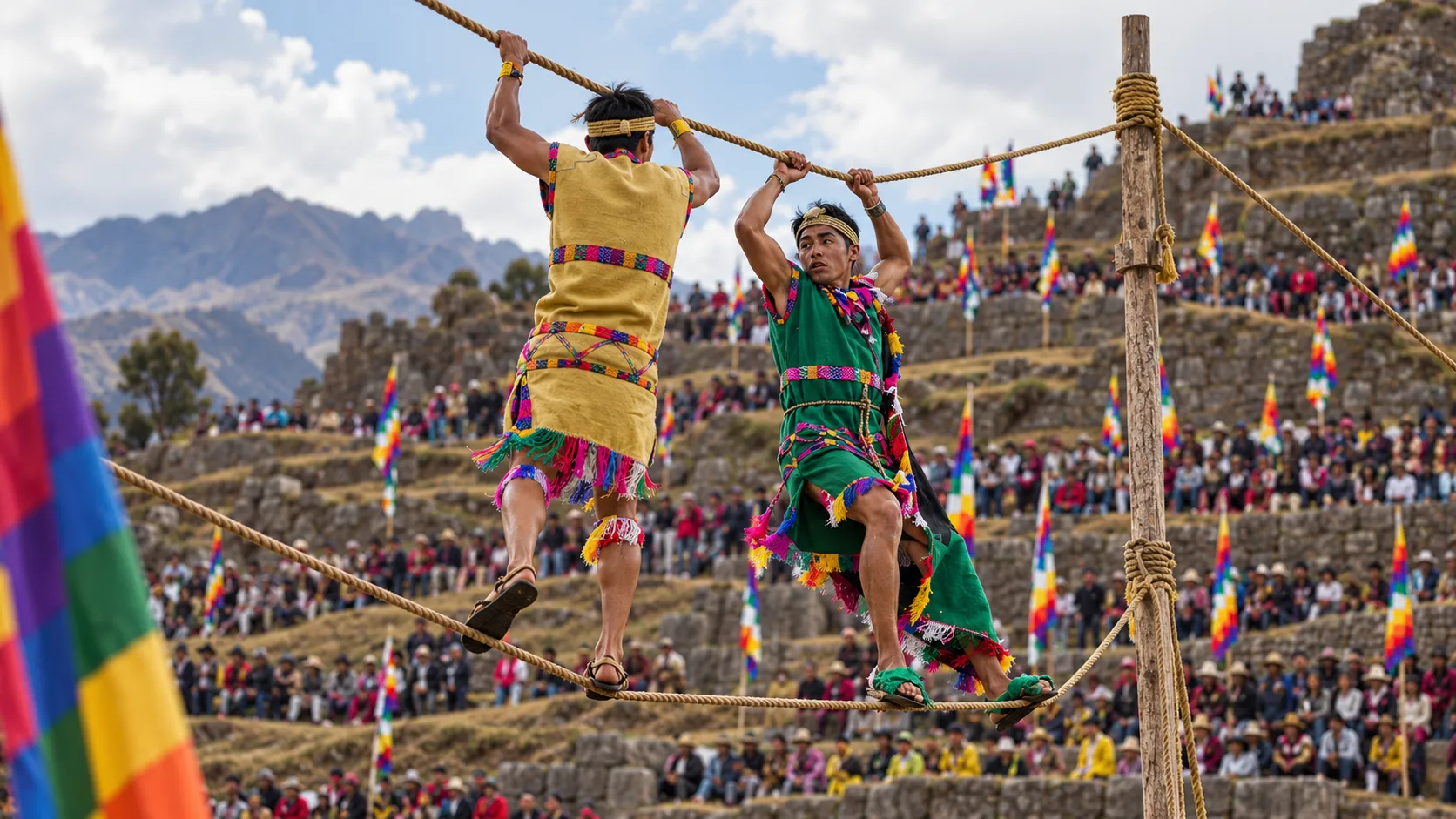
Third Sunday of September. 9 a.m. The pututos sound and 1,500 students from the National School of Sciences of Cusco set off in procession from their school to the Sacsayhuamán esplanade. They are going to compete — for real — in speed, strength, and endurance tests that replicate those the Tahuantinsuyo used to determine who was ready for adulthood. It is not a choreography. It is the Warachicuy, and in 2025 it was declared a Cultural Interest.

48 km on foot: How to reach the Señor de Huanca in Cusco

Every September 14, thousands of people walk 48 kilometers from the city of Cusco to the sanctuary of the Señor de Huanca, in the district of San Salvador, province of Calca, at 3,100 m.a.s.l. It is neither a tourist trekking trip nor an organized tour: it is a genuine pilgrimage that sets off at night from San Jerónimo and arrives at dawn on the main day. Here we explain the route, what it physical demands, and why this tradition continues to draw devotees from all over Peru and neighboring countries.

Are you planning to visit
Machu Picchu in 2026?

We would like to inform our travelers that availability for Circuit 1 and 2 for the months of September, October and November is at 85% of capacity. We recommend booking at least 3 months in advance.

New Circuits and Routes

The Ministry of Culture has consolidated the three main tours. As of 2026, Tour 2 (The Royal Route) remains the only one that allows visitors to take the classic photo from the Guardian’s House. We have adapted all our packages to ensure this access.

Digital Check-In and Biometric Verification

Say goodbye to long check-in lines! Starting this season, entry is faster thanks to the new digital check-in system. Our packages include full management of your personalized tickets to prevent errors on the state platform.

Circuit Ideal for... Clasic photo Difficulty
Circuit 1 (Panoramic) High views and photo posts Yes Low
Circuit 2 (Andean) Complete circuit through the ruins Yes Medium
Circuit 3 (Reality) Persons or reduced movement No Very low

Ask about our Machu Picchu packages

Explore the best of our land

Explore the breathtaking diversity of the Central Andes. From ancient archaeological wonders and surreal high-altitude landscapes to world-class gastronomy and Amazonian adventures, our updated 2026 guides showcase the very best of this premier global destination.