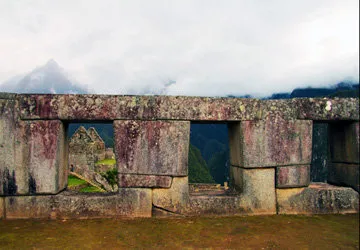
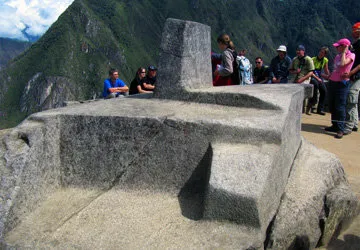
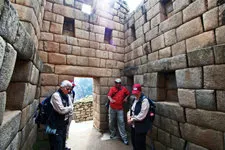
Examing the Incan architecture of Machu Picchu Citadel

Changes Planned for Machu Picchu Citadel

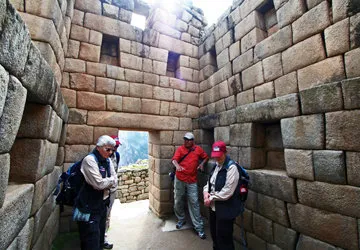
Examing the Incan architecture of Machu Picchu Citadel
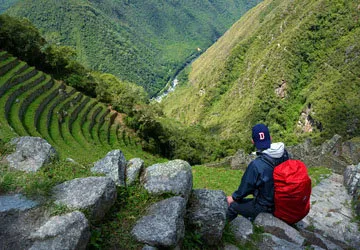
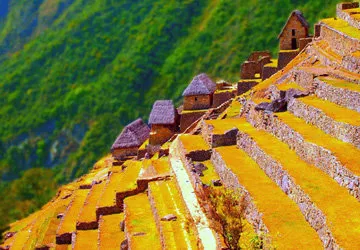
Overlooking the terraces and ruins of Machu Picchu
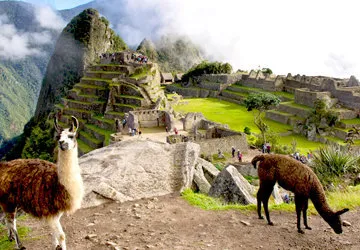
Llamas at Machu Picchu Archeological Complex in Peru

As a result of a recent visit by Peru's Vice-minister of Cultural Heritage, Luis Castillo Butters, and the Cusco's Regional Director of Culture, Ricardo Ruiz Caro, a variety of changes have been planned for Machu Picchu Citadel.

As a result of a recent visit by Peru's Vice-minister of Cultural Heritage, Luis Castillo Butters, and the Cusco's Regional Director of Culture, Ricardo Ruiz Caro, a variety of changes have been planned for Machu Picchu Citadel. The visiting functionaries agreed upon the necessity of implementing new measures to provide national and foreign visitors with better amenities while still preserving the archeological site and the biodiversity of the greater area known as Machu Picchu Sanctuary. The biggest change is that the new control post which regulates entry in Machu Picchu Citadel will be located just a few meters from the Ruinas Bridge, close to the Manuel Chávez Ballón Museum.

The museum itself is an excellent but small and often overlooked institution which displays artifacts found at the Machu Picchu archeological site, historical photos and items from the site's excavations, and a scale model of the ruins explaining the purpose of different structures and the construction methods used. Furthermore, one can learn about the area's flora at the museum's botanical garden.

Visitors will pass through the control point, which will double as a large visitor center complete with restrooms and cloakroom. There, visitors will receive information from Ministry of Culture personnel regarding Machu Picchu and the research conducted there. Afterwords they will continue on foot to the Inca citadel. The museum will also receive increased investment in order to offer a first-rate site museum.

The functionaries have also evaluated the need to install hygienic services within the citadel, which receives 2,500 visitors daily.  According to Butters, specialists will be consulted, and the experience of other world monuments will be studied, in order to offer this amenity without adversely affecting the site and its natural surroundings. As Ruiz Caro put it, "We want to provide all the comforts to national and foreign tourists, replicating the best experiences of emblematic world heritage sites, but at the same time, we will require respect for the monument and its sacredness."
As a result of a recent visit by Peru's Vice-minister of Cultural Heritage, Luis Castillo Butters, and the Cusco's Regional Director of Culture, Ricardo Ruiz Caro, a variety of changes have been planned for Machu Picchu Citadel.

As a result of a recent visit by Peru's Vice-minister of Cultural Heritage, Luis Castillo Butters, and the Cusco's Regional Director of Culture, Ricardo Ruiz Caro, a variety of changes have been planned for Machu Picchu Citadel. The visiting functionaries agreed upon the necessity of implementing new measures to provide national and foreign visitors with better amenities while still preserving the archeological site and the biodiversity of the greater area known as Machu Picchu Sanctuary. The biggest change is that the new control post which regulates entry in Machu Picchu Citadel will be located just a few meters from the Ruinas Bridge, close to the Manuel Chávez Ballón Museum.

The museum itself is an excellent but small and often overlooked institution which displays artifacts found at the Machu Picchu archeological site, historical photos and items from the site's excavations, and a scale model of the ruins explaining the purpose of different structures and the construction methods used. Furthermore, one can learn about the area's flora at the museum's botanical garden.

Visitors will pass through the control point, which will double as a large visitor center complete with restrooms and cloakroom. There, visitors will receive information from Ministry of Culture personnel regarding Machu Picchu and the research conducted there. Afterwords they will continue on foot to the Inca citadel. The museum will also receive increased investment in order to offer a first-rate site museum.

The functionaries have also evaluated the need to install hygienic services within the citadel, which receives 2,500 visitors daily.  According to Butters, specialists will be consulted, and the experience of other world monuments will be studied, in order to offer this amenity without adversely affecting the site and its natural surroundings. As Ruiz Caro put it, "We want to provide all the comforts to national and foreign tourists, replicating the best experiences of emblematic world heritage sites, but at the same time, we will require respect for the monument and its sacredness."
News, routes, and expert tips

Explore the latest from our Cusco travel blog. Get practical guides, Machu Picchu updates, and fresh trekking and culture recommendations. Everything you need to travel Cusco safely and stylishly in 2026. Your next Andean story starts here!

Inca World Travel Your ticket to Machu Picchu cannot be lent: What you need to know before the holiday

With the national holiday on August 6 (Battle of Junín) right around the corner, many travelers are organizing last-minute visits to Machu Picchu. Before buying, there is a rule that causes more trouble than it seems: the ticket is personal, unique, and non-transferable. Learn how this rule works at the checkpoint, why you cannot give your ticket away, and how to avoid inconveniences to enjoy your trip to the sanctuary with complete peace of mind.

Inca World Travel Official Machu Picchu Circuits and Routes Guide 2026: How to Choose Your Ideal Ticket

Choosing your entry ticket to Machu Picchu is no longer just buying a simple ticket; it is selecting a strategic route for your trip. The official system organizes the citadel into 3 main circuits with 10 route variants tailored to different traveler profiles. From the classic panoramic photo to the ascent of Huayna Picchu or the legendary Inca Trail, understanding how each circuit works is key to avoiding inconveniences and securing your spot in advance on the official platform.

Inca World Travel Seven Natural Wonders Hidden By Peru Discover Now

Ready to explore beyond Machu Picchu? Discover the 7 natural wonders of Peru, a country brimming with hidden ecological treasures. From deep turquoise lagoons and the famous rainbow mountain of colors to surreal stone forests and vast rivers, these stunning destinations are waiting for you. Get ready to dive into the raw, untouched beauty of South America!

Are you planning to visit
Machu Picchu in 2026?

We would like to inform our travelers that availability for Circuit 1 and 2 for the months of September, October and November is at 85% of capacity. We recommend booking at least 3 months in advance.

New Circuits and Routes

The Ministry of Culture has consolidated the three main tours. As of 2026, Tour 2 (The Royal Route) remains the only one that allows visitors to take the classic photo from the Guardian’s House. We have adapted all our packages to ensure this access.

Digital Check-In and Biometric Verification

Say goodbye to long check-in lines! Starting this season, entry is faster thanks to the new digital check-in system. Our packages include full management of your personalized tickets to prevent errors on the state platform.

Circuit Ideal for... Clasic photo Difficulty
Circuit 1 (Panoramic) High views and photo posts Yes Low
Circuit 2 (Andean) Complete circuit through the ruins Yes Medium
Circuit 3 (Reality) Persons or reduced movement No Very low

Ask about our Machu Picchu packages

Explore the best of our land

Explore the breathtaking diversity of the Central Andes. From ancient archaeological wonders and surreal high-altitude landscapes to world-class gastronomy and Amazonian adventures, our updated 2026 guides showcase the very best of this premier global destination.