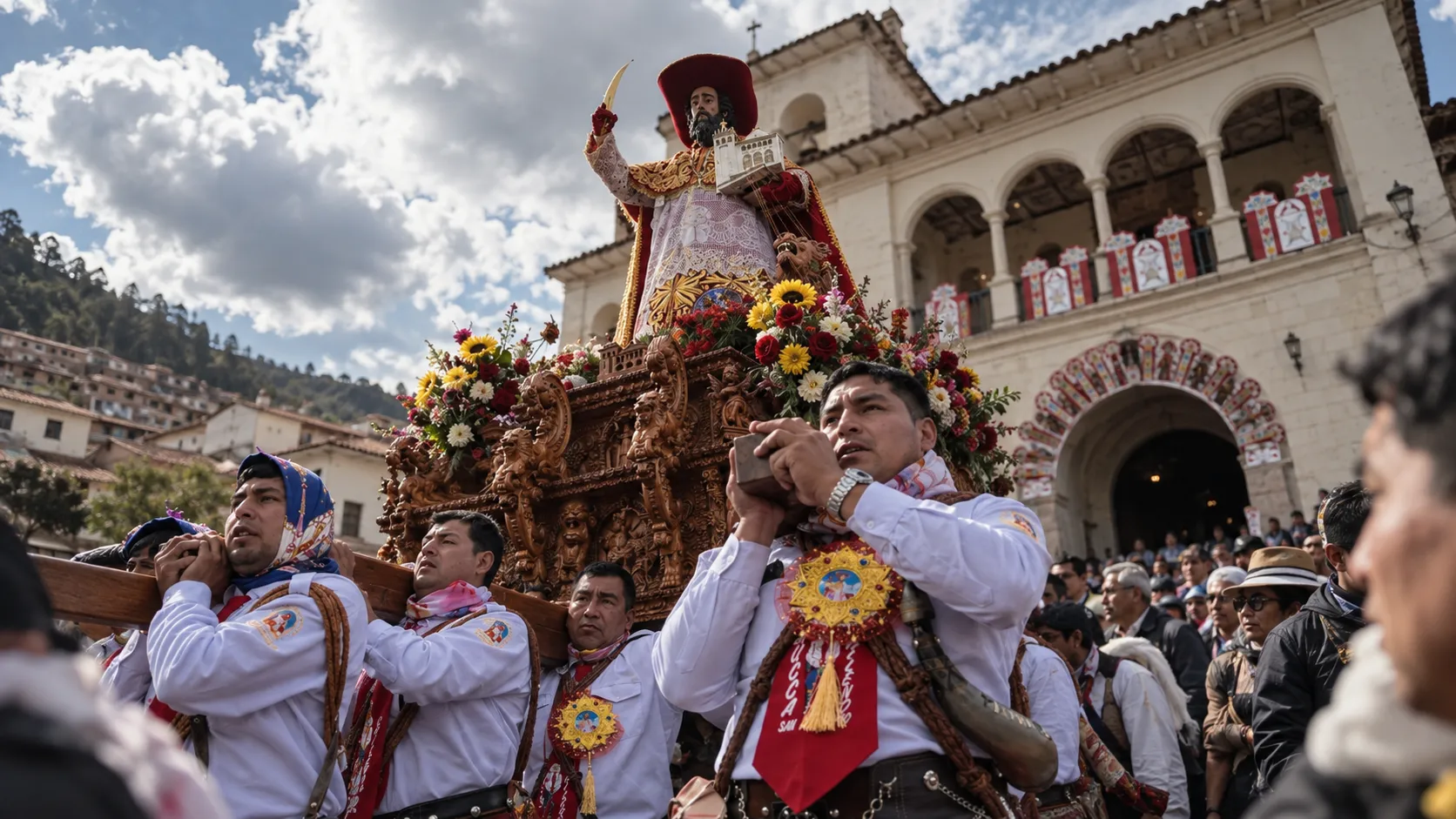
Just eleven kilometers southeast of Cusco's Plaza de Armas, far from the tourist crowds, lies one of the region's most authentic Andean devotions. Every late September, the historic district of San Jerónimo honors its protector through five days of faith, neighborhood tradition, and cultural syncretism. Featuring over twenty-six dance troupes, a 16th-century church built atop an Inca huaca, and a bustling community food fair, this festival—declared Cultural Heritage of the Nation—reveals a vibrant side of Cusco that few tourists ever witness.
Why they call him "Doctor Patrón" in San Jerónimo
Jerome of Stridon was proclaimed a Doctor of the Catholic Church in 1295, an honor granted for his theological scholarship and for translating the Bible from Hebrew and Greek into Latin in the Vulgate. When the Spanish established the parish in 1570 as part of the reducciones system, they designated him as the patron saint. Far from viewing him as merely a decorative statue, locals proudly refer to him as Doctor Patrón San Jerónimo, recognizing a spiritual and civic hierarchy unique to the area.
This distinction reflects a deep collective devotion: for the people of San Jerónimo, the saint is an active protector who guards the community and binds together families that have stewarded these ayllus for generations.
Five days of celebration and community organization
The festival unfolds over five ritual days: September 28 marks the official start, September 29 features the Grand Entry of Dances, September 30 is the Main Day with a solemn mass and procession, October 1 hosts the Pilgrimage, and October 2 concludes with the traditional Cacharpari or festive farewell.
The festival's enduring spirit relies on a rigorous community organization led by the carguyoq (stewards)—local residents who take on the financial responsibility of funding sacred vestments, brass bands, and receptions in coordination with three main entities:
- Central Stewardship (Mayordomía central): Responsible for the saint's ceremonial vestments and leading the central liturgy.
- Brotherhood of Knights (Hermandad de Caballeros): Representatives who guard the image and organize the procession route.
- ADAFOSAJ Association: The union that coordinates and regulates all participating folk dance troupes.
Twenty-six indigenous dances in the district streets
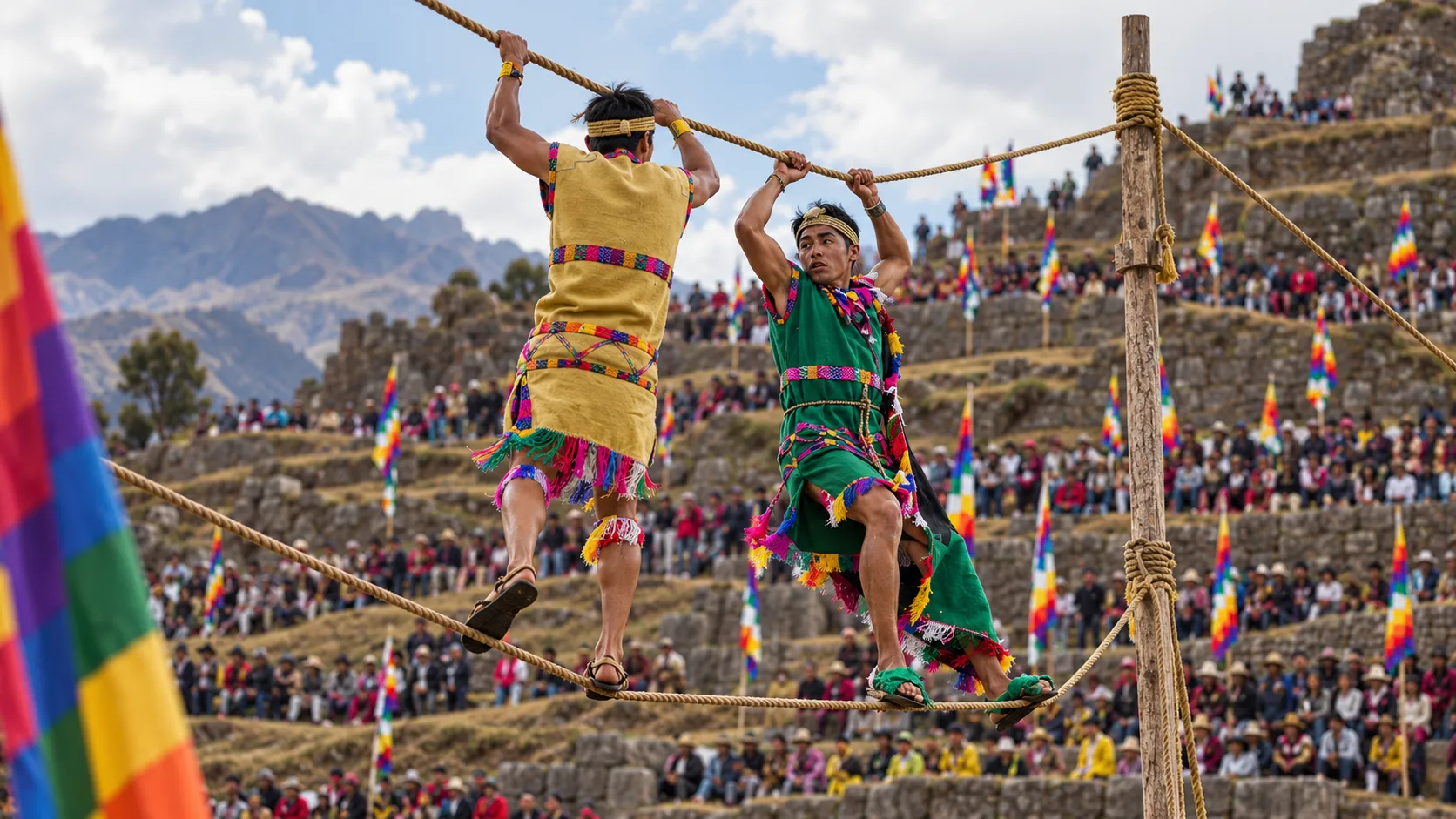
During the celebrations, twenty-six traditional troupes fill the streets of San Jerónimo with music and vibrant colors. Traditional groups such as the Majeños and Qhapaq Qolla perform dances that blend social satire with religious fervor. These are not staged performances for tourists, but genuine expressions of community identity featuring dancers of all ages, from young children to veterans in their seventies.
The most colorful moment is the Grand Entry on the 29th, which marches from the Cajonahuaylla sports complex to the parish church. The final procession is equally notable as the image of the patron saint is carried out to Avenida de la Cultura to bless the main entrance to the city of Cusco.
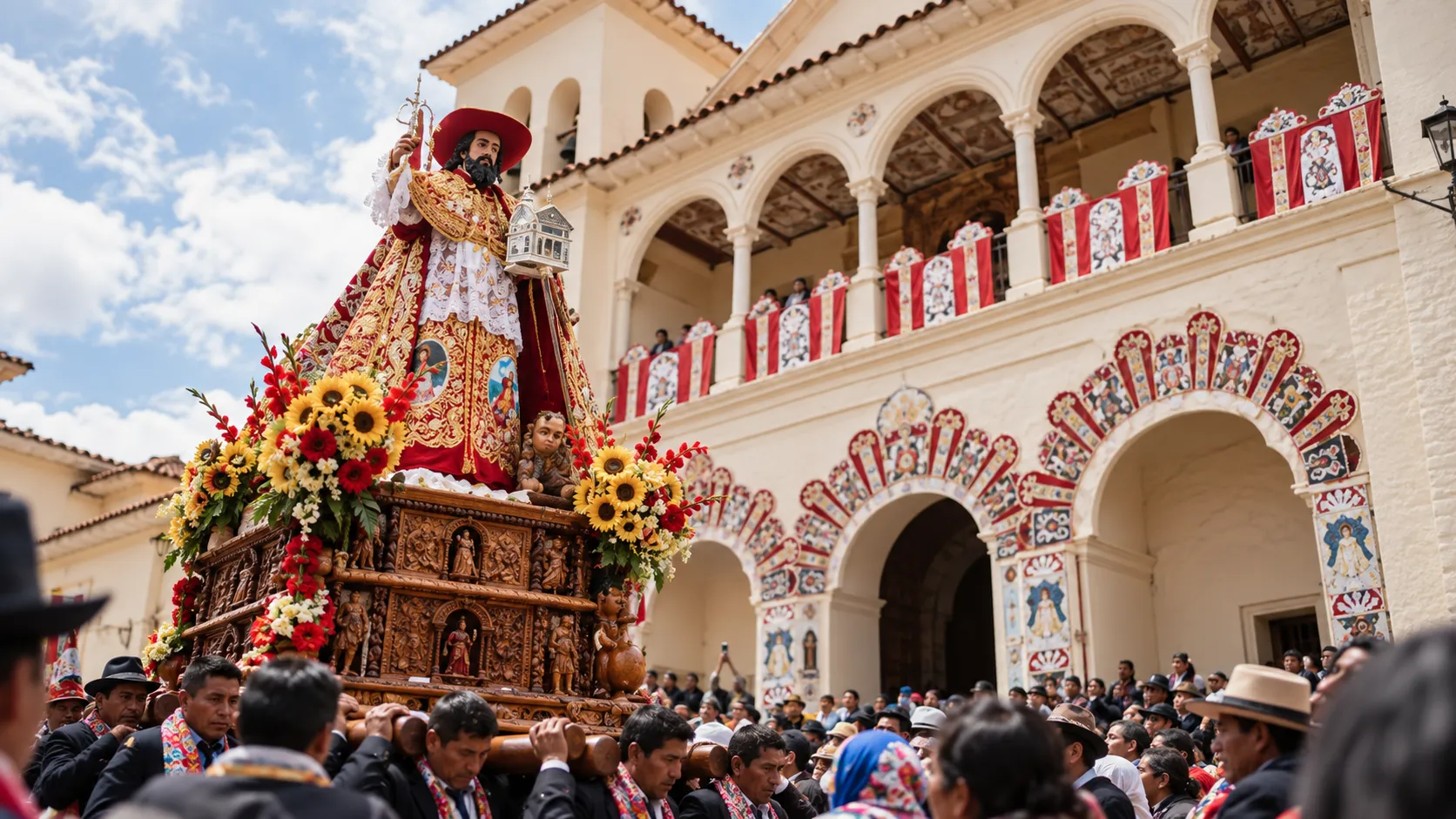
The 16th-century church: Viceregal architecture on an Inca huaca
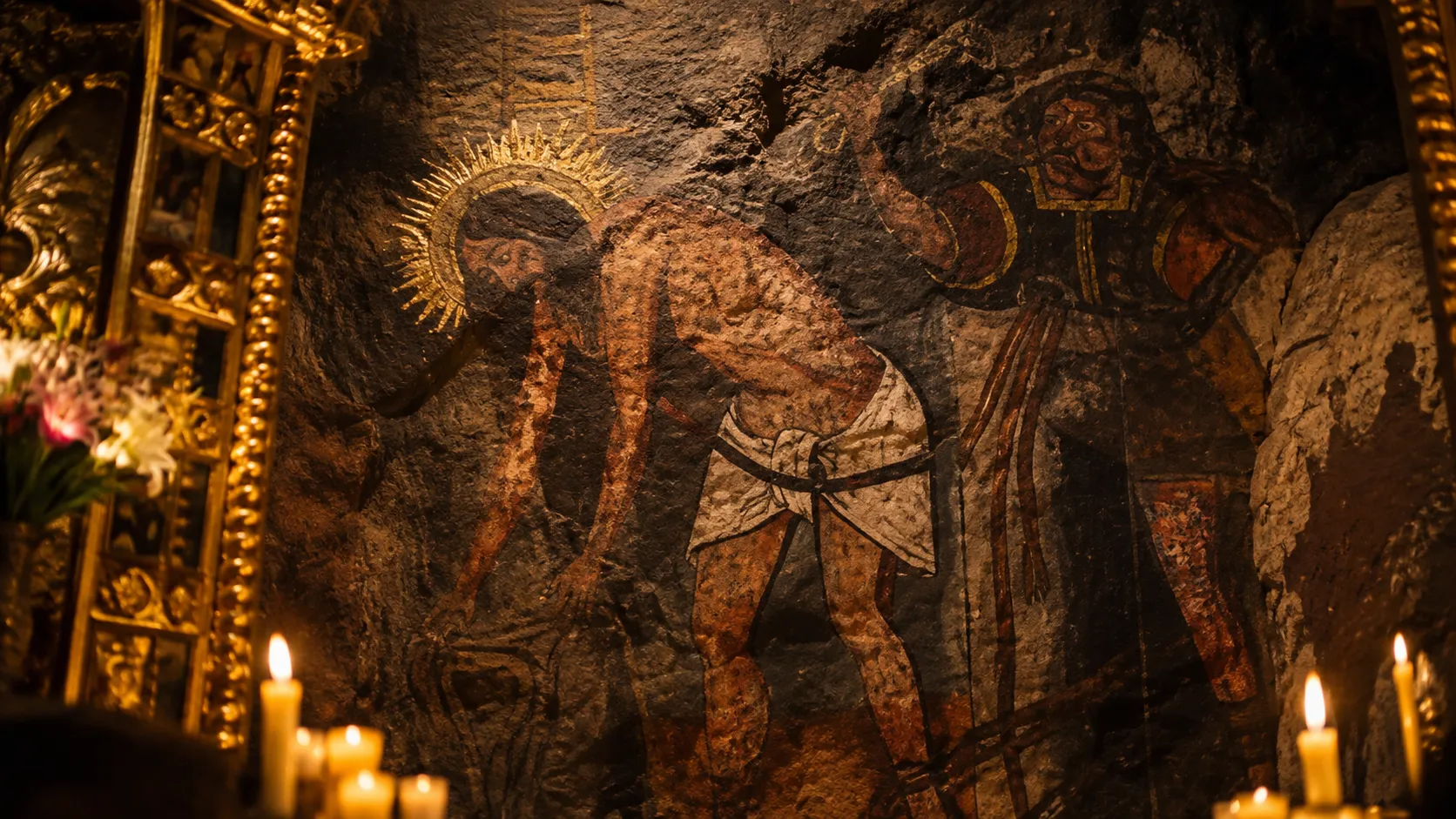
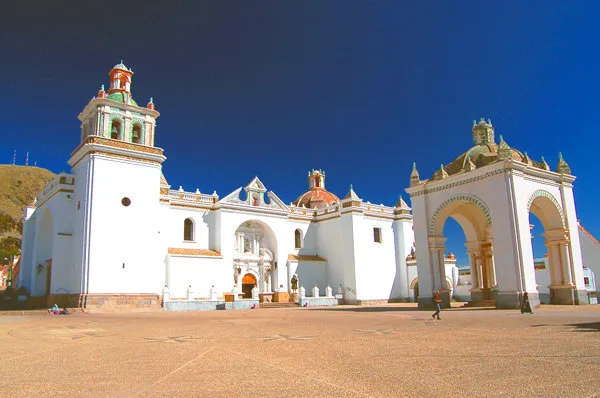
Begun in 1572 on the grounds of the ancient Sorana ayllu, the San Jerónimo Church was built over the Antamachay Inca huaca. This elevated platform base gives the structure a commanding presence. Outdoors, a stone cross with pre-Hispanic Andean engravings stands out, while inside, the nave boasts a silver high altar and stunning wall paintings.
Declared a Historical Artistic Monument in 1972, the church is actively preserved by the Ministry of Culture, which recently delivered the restored image of the Virgen Dolorosa, preserving its historical value. Its artwork connects directly to the artistic heritage of the southern Andes; if you are passionate about this style, the Andean Baroque Route will take you through sister churches such as Andahuaylillas, Huaro, and Canincunca.
Cultural Heritage of the Nation and Andean food fair
In 2016, the Ministry of Culture declared this celebration Cultural Heritage of the Nation through Vice-Ministerial Resolution N° 052-2016-VMPCIC-MC, recognizing its deep ritual syncretism. The solemnity of the event is documented in the official chronicle of the San Jerónimo patronal festival. This celebration complements the festivities where EMUFEC promotes Cusco's traditional calendar.
Around the main square, the food fair brings together iconic regional flavors such as chiriuchu, chicharrón, and adobo. Learn about the traditional Cusco dishes you'll find at the fair. At these tables, Andean guinea pig is an essential cultural feast, always paired with the traditional Andean drink: discover the ancient history of chicha de jora that accompanies Cusco's celebrations.

How to visit San Jerónimo and explore the South Valley
Reaching San Jerónimo from downtown Cusco is easy: it takes just twenty minutes by public transport or taxi along Avenida de la Cultura. Visiting allows you to connect with key archaeological sites along the same route; discover the archaeological circuit of Cusco's South Valley, where ancient complexes like Tipón, Pikillaqta, and Andahuaylillas await exploration.
If you're seeking more authentic celebrations, experience the traditional Virgen de Paucartambo and Tres Cruces festival, or wander through colonial neighborhoods with a walking tour of historic Cusco. To complement your journey, book the classic Cusco City Tour Full Day or learn about the history of Inti Raymi at Sacsayhuamán.
Discover living Andean culture with local guides: Book your cultural tour of the South Valley and Cusco with Inca World and enjoy an authentic experience backed by expert logistics and guidance.