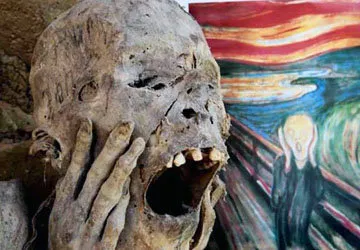
Chachapoyas mummy alongside Edvard Munch's

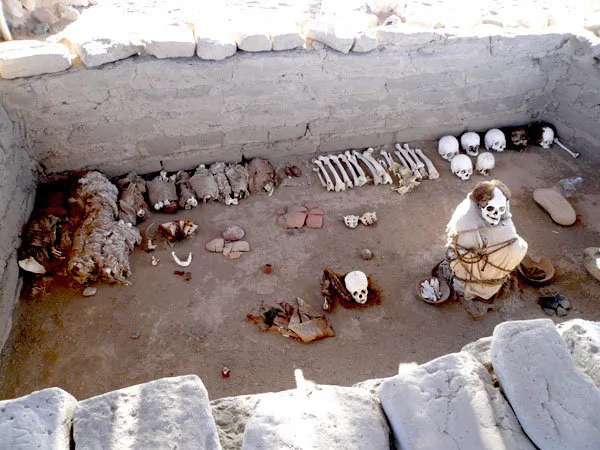
Original Tomb of Peruvian Mummy which Inspired Munch's Scream

Chachapoyas mummy alongside Edvard Munch's
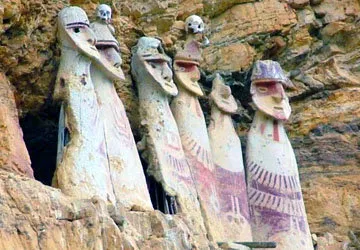
Sarcophagi from the Chachapoyas Culture in Peru
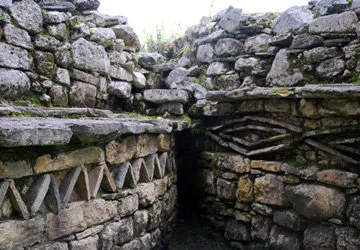
Ruins of Kuelap Fortress in Chachapoyas, Peru

It may seem odd to see Edvard Munch's name in the news alongside archeological findings, but the recent rediscovery of a tomb in the Peruvian amazon has caused just that: the exact site where the mummy which inspired Munch's "Scream"- one of the most reproduced paintings in the world- was discovered in the Peruvian Amazon was located last week.

It may seem odd to see Edvard Munch's name in the news alongside archeological findings, but the recent rediscovery of a tomb in the Peruvian amazon has caused just that: the exact site where the mummy which inspired Munch's "Scream"- one of the most reproduced paintings in the world- was discovered in the Peruvian Amazon was located last week.

The Norwegian painter's most iconic work, The Scream, is renowned worldwide for the psychological turmoil it depicts. Several art historians have attested that the painting is based on the mummy of a Chachapoyas warrior which was discovered 130 years ago near the Utcubamba River and taken to Paris to be displayed in an exhibition at the Ethnographic Exchange Museum.

Art historian Wayne V. Anderson's hypothesis that the mummy first inspired Paul Gauguin was confirmed by investigator Stefan Ziemendorff upon finding a book of sketches of the mummy. A decade later, art historian Robert Rosenblum established that Munch's famous painting was also based on the mummy.

While walking with friends one evening, Munch had a vision in which the faces of his companions paled and a "huge endless scream course through nature" (as Munch himself described in a letter about the painting). Wishing to paint his vision, he used the Peruvian mummy as a model, probably inspired by Gauguin.

Now, Ziemendorff has announced that the site where the warrior's mummy, as well as three others which were not taken to Paris, has been located thanks to details included in the chronicle written by Pierre Vidal-Senèze, who discovered and sacked the tomb in search of objects to sell in Europe.

Chachapoyas, located in the Amazonas region of Peru, is known mainly for the ruins of Kuelap Fortress (built by the culture of the same name), warriors' mummies, and its carved sarcophogi.
It may seem odd to see Edvard Munch's name in the news alongside archeological findings, but the recent rediscovery of a tomb in the Peruvian amazon has caused just that: the exact site where the mummy which inspired Munch's "Scream"- one of the most reproduced paintings in the world- was discovered in the Peruvian Amazon was located last week.

It may seem odd to see Edvard Munch's name in the news alongside archeological findings, but the recent rediscovery of a tomb in the Peruvian amazon has caused just that: the exact site where the mummy which inspired Munch's "Scream"- one of the most reproduced paintings in the world- was discovered in the Peruvian Amazon was located last week.

The Norwegian painter's most iconic work, The Scream, is renowned worldwide for the psychological turmoil it depicts. Several art historians have attested that the painting is based on the mummy of a Chachapoyas warrior which was discovered 130 years ago near the Utcubamba River and taken to Paris to be displayed in an exhibition at the Ethnographic Exchange Museum.

Art historian Wayne V. Anderson's hypothesis that the mummy first inspired Paul Gauguin was confirmed by investigator Stefan Ziemendorff upon finding a book of sketches of the mummy. A decade later, art historian Robert Rosenblum established that Munch's famous painting was also based on the mummy.

While walking with friends one evening, Munch had a vision in which the faces of his companions paled and a "huge endless scream course through nature" (as Munch himself described in a letter about the painting). Wishing to paint his vision, he used the Peruvian mummy as a model, probably inspired by Gauguin.

Now, Ziemendorff has announced that the site where the warrior's mummy, as well as three others which were not taken to Paris, has been located thanks to details included in the chronicle written by Pierre Vidal-Senèze, who discovered and sacked the tomb in search of objects to sell in Europe.

Chachapoyas, located in the Amazonas region of Peru, is known mainly for the ruins of Kuelap Fortress (built by the culture of the same name), warriors' mummies, and its carved sarcophogi.
News, routes, and expert tips

Explore the latest from our Cusco travel blog. Get practical guides, Machu Picchu updates, and fresh trekking and culture recommendations. Everything you need to travel Cusco safely and stylishly in 2026. Your next Andean story starts here!

Inca World Travel Your ticket to Machu Picchu cannot be lent: What you need to know before the holiday

With the national holiday on August 6 (Battle of Junín) right around the corner, many travelers are organizing last-minute visits to Machu Picchu. Before buying, there is a rule that causes more trouble than it seems: the ticket is personal, unique, and non-transferable. Learn how this rule works at the checkpoint, why you cannot give your ticket away, and how to avoid inconveniences to enjoy your trip to the sanctuary with complete peace of mind.

Inca World Travel Official Machu Picchu Circuits and Routes Guide 2026: How to Choose Your Ideal Ticket

Choosing your entry ticket to Machu Picchu is no longer just buying a simple ticket; it is selecting a strategic route for your trip. The official system organizes the citadel into 3 main circuits with 10 route variants tailored to different traveler profiles. From the classic panoramic photo to the ascent of Huayna Picchu or the legendary Inca Trail, understanding how each circuit works is key to avoiding inconveniences and securing your spot in advance on the official platform.

Inca World Travel Seven Natural Wonders Hidden By Peru Discover Now

Ready to explore beyond Machu Picchu? Discover the 7 natural wonders of Peru, a country brimming with hidden ecological treasures. From deep turquoise lagoons and the famous rainbow mountain of colors to surreal stone forests and vast rivers, these stunning destinations are waiting for you. Get ready to dive into the raw, untouched beauty of South America!

Are you planning to visit
Machu Picchu in 2026?

We would like to inform our travelers that availability for Circuit 1 and 2 for the months of September, October and November is at 85% of capacity. We recommend booking at least 3 months in advance.

New Circuits and Routes

The Ministry of Culture has consolidated the three main tours. As of 2026, Tour 2 (The Royal Route) remains the only one that allows visitors to take the classic photo from the Guardian’s House. We have adapted all our packages to ensure this access.

Digital Check-In and Biometric Verification

Say goodbye to long check-in lines! Starting this season, entry is faster thanks to the new digital check-in system. Our packages include full management of your personalized tickets to prevent errors on the state platform.

Circuit Ideal for... Clasic photo Difficulty
Circuit 1 (Panoramic) High views and photo posts Yes Low
Circuit 2 (Andean) Complete circuit through the ruins Yes Medium
Circuit 3 (Reality) Persons or reduced movement No Very low

Ask about our Machu Picchu packages

Explore the best of our land

Explore the breathtaking diversity of the Central Andes. From ancient archaeological wonders and surreal high-altitude landscapes to world-class gastronomy and Amazonian adventures, our updated 2026 guides showcase the very best of this premier global destination.