The fortified city of Kuelap in Chachapoyas Peru

Kuelap: The City Above the Clouds in Peru's Amazonas Region

Mini. Kuelap Fortress in Chachapoyas Peru
Cover. Kuelap Fortress in Chachapoyas Peru.
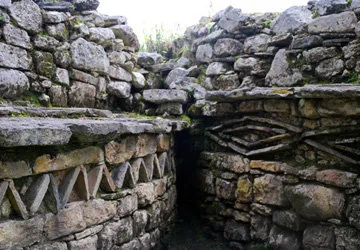
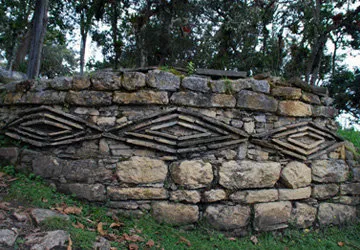
The remains of decorative circular walls at Kuelap
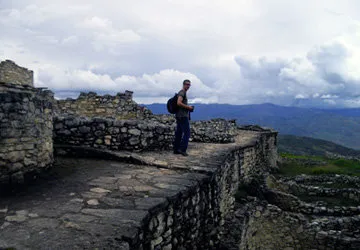
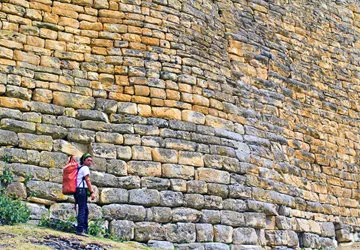
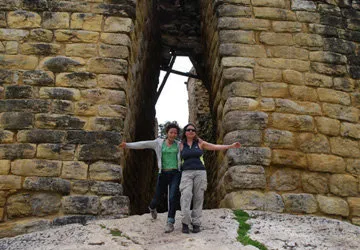
Kuelap Fortress's massive outer walls.
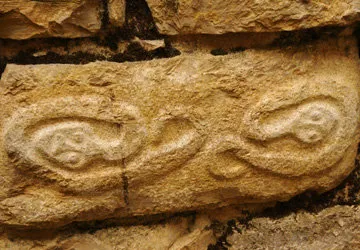
Snake carving at Kuelap in the Amazonas region of Peru
More visitors are arriving each year.
Remains and overgrown vegetation at Kuelap

In Peru's Amazonas region, one can find what is arguably one of the country's greatest and most mysterious archeological sites: the fortified citadel of Kuélap. Visits to the oft-overlooked site have been steadily increasing over the last years. To visit Kuélap, one must head to the city of Chachapoyas, which was chosen by the popular National Geographic Traveler Magazine as one of the "50 Tours of a Lifetime". What does it take to get there, and what will you find?...

Tourist visits to Kuélap fortress are increasing by 15% annually, meaning that the relatively overlooked site now attracts up to 700 people a day, even though some days, you might spot only 30 other visitors. To put this in perspective, thousands of people visit Machu Picchu every day (more than a million a year)!

Surrounded by cliffs and precipices, the ancient fortified citadel is found on a humid ridge overlooking the Utcubamba Valley in northeastern Peru. It's also known as the City Above the Clouds. To visit Kuélap, one must head to the city of Chachapoyas, which was chosen by the popular National Geographic Traveler Magazine as one of the "50 Tours of a Lifetime". It takes almost 24 hours to reach the city of Chachapoyas by bus from Lima, but from there it's only a short hop to Tingo, from where you begin a 3-4 hour hike.

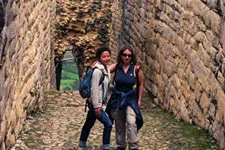
Predating Machu Picchu, it was constructed in the 6th century AD and occupied until the early Colonial period (1532-1570AD). It served as the political center of the pre-Columbian Chachapoya civilization, which was eventually subjugated by the Incas. The site boasts hundreds upon hundreds of circular buildings, the majority of which are protected within the 65 feet high fortress walls, which only has three narrow portals allowing only one entrant at a time. Various structures are decorated with carvings of snakes and faces, which are especially prevalent among the recently uncovered tombs. To build all of this, the amount of stones and earth that had to be moved equals that of three Egyptian pyramids.

After Kuélap, the second great touristic attraction in the Amazonas region is the recently discovered Gocta waterfall, considered the third highest in the world. Prior to 2002, it was only known to locals, and avoided due to legends that a mermaid or large serpent guarded it and accosted those who neared it. Today, international and national tourists flock to Gocta, which can be reached by a arduous 5 hour hike.
In Peru's Amazonas region, one can find what is arguably one of the country's greatest and most mysterious archeological sites: the fortified citadel of Kuélap. Visits to the oft-overlooked site have been steadily increasing over the last years. To visit Kuélap, one must head to the city of Chachapoyas, which was chosen by the popular National Geographic Traveler Magazine as one of the "50 Tours of a Lifetime". What does it take to get there, and what will you find?...

Tourist visits to Kuélap fortress are increasing by 15% annually, meaning that the relatively overlooked site now attracts up to 700 people a day, even though some days, you might spot only 30 other visitors. To put this in perspective, thousands of people visit Machu Picchu every day (more than a million a year)!

Surrounded by cliffs and precipices, the ancient fortified citadel is found on a humid ridge overlooking the Utcubamba Valley in northeastern Peru. It's also known as the City Above the Clouds. To visit Kuélap, one must head to the city of Chachapoyas, which was chosen by the popular National Geographic Traveler Magazine as one of the "50 Tours of a Lifetime". It takes almost 24 hours to reach the city of Chachapoyas by bus from Lima, but from there it's only a short hop to Tingo, from where you begin a 3-4 hour hike.

Predating Machu Picchu, it was constructed in the 6th century AD and occupied until the early Colonial period (1532-1570AD). It served as the political center of the pre-Columbian Chachapoya civilization, which was eventually subjugated by the Incas. The site boasts hundreds upon hundreds of circular buildings, the majority of which are protected within the 65 feet high fortress walls, which only has three narrow portals allowing only one entrant at a time. Various structures are decorated with carvings of snakes and faces, which are especially prevalent among the recently uncovered tombs. To build all of this, the amount of stones and earth that had to be moved equals that of three Egyptian pyramids.

After Kuélap, the second great touristic attraction in the Amazonas region is the recently discovered Gocta waterfall, considered the third highest in the world. Prior to 2002, it was only known to locals, and avoided due to legends that a mermaid or large serpent guarded it and accosted those who neared it. Today, international and national tourists flock to Gocta, which can be reached by a arduous 5 hour hike.
News, routes, and expert tips

Explore the latest from our Cusco travel blog. Get practical guides, Machu Picchu updates, and fresh trekking and culture recommendations. Everything you need to travel Cusco safely and stylishly in 2026. Your next Andean story starts here!

The festival starting Monday 28th that isn't touristy: San Jerónimo, 5 days

Just 11 kilometers from the Plaza de Armas, the historic district of San Jerónimo celebrates its patron saint every late September: 5 days of processions, 26+ dance troupes, a food fair, and a 16th-century church built on an Inca huaca. In 2016, it was declared Cultural Heritage of the Nation. Most tourists don't know it exists; many young locals don't either. This year it starts on Monday, September 28, with the main day on Wednesday 30.

1,500 young people in Sacsayhuamán competing as they did 500 years ago

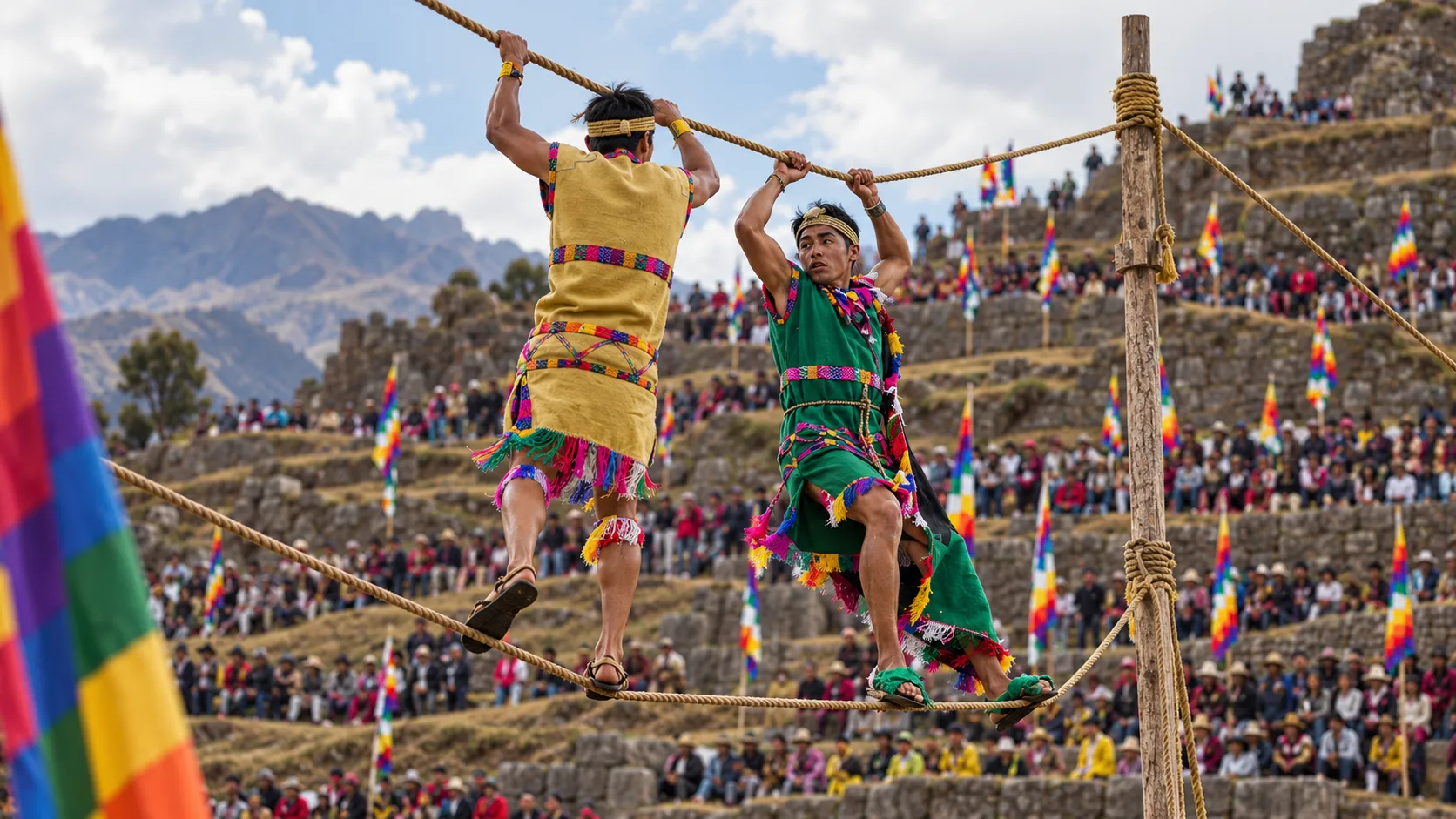
Third Sunday of September. 9 a.m. The pututos sound and 1,500 students from the National School of Sciences of Cusco set off in procession from their school to the Sacsayhuamán esplanade. They are going to compete — for real — in speed, strength, and endurance tests that replicate those the Tahuantinsuyo used to determine who was ready for adulthood. It is not a choreography. It is the Warachicuy, and in 2025 it was declared a Cultural Interest.

48 km on foot: How to reach the Señor de Huanca in Cusco

Every September 14, thousands of people walk 48 kilometers from the city of Cusco to the sanctuary of the Señor de Huanca, in the district of San Salvador, province of Calca, at 3,100 m.a.s.l. It is neither a tourist trekking trip nor an organized tour: it is a genuine pilgrimage that sets off at night from San Jerónimo and arrives at dawn on the main day. Here we explain the route, what it physical demands, and why this tradition continues to draw devotees from all over Peru and neighboring countries.

Are you planning to visit
Machu Picchu in 2026?

We would like to inform our travelers that availability for Circuit 1 and 2 for the months of September, October and November is at 85% of capacity. We recommend booking at least 3 months in advance.

New Circuits and Routes

The Ministry of Culture has consolidated the three main tours. As of 2026, Tour 2 (The Royal Route) remains the only one that allows visitors to take the classic photo from the Guardian’s House. We have adapted all our packages to ensure this access.

Digital Check-In and Biometric Verification

Say goodbye to long check-in lines! Starting this season, entry is faster thanks to the new digital check-in system. Our packages include full management of your personalized tickets to prevent errors on the state platform.

Circuit Ideal for... Clasic photo Difficulty
Circuit 1 (Panoramic) High views and photo posts Yes Low
Circuit 2 (Andean) Complete circuit through the ruins Yes Medium
Circuit 3 (Reality) Persons or reduced movement No Very low

Ask about our Machu Picchu packages

Explore the best of our land

Explore the breathtaking diversity of the Central Andes. From ancient archaeological wonders and surreal high-altitude landscapes to world-class gastronomy and Amazonian adventures, our updated 2026 guides showcase the very best of this premier global destination.